Hearing True EQ: Room Tune Your Monitors

When you listen to music, do you really get to hear the song in the way that the writers, players and studio people do when it is first created? Probably not. The fact is that all stereo systems change the sound in subtle (and sometimes not so subtle) ways. They may be heavy at the bass end – think of all the cars that go by with their subwoofers blaring. If you listen on your cell phone you’re hearing it through tiny speakers. Forget about picking up the bottom end of the music. You’ll have some improvement listening through decent earbuds, which is why I suggest that when checking out songs. But all stereo systems alter the sound to some extent. When you’re mixing in a recording studio you have to take this in to consideration. The best way to do this is to make sure the monitors you are mixing on have a flat EQ response. In addition to the speakers themselves, where they are placed in the room will also effect what you hear (this is also true when you set up your home stereo). Are the monitors placed in a corner or against a flat wall? What type of surface is behind them – drywall, blankets, sound absorption panels? When we changed the placement of our Yamaha NS10M Studio monitors the sound that we hear also changed. They were placed further away from the listening point and sound panels were placed at equal distances beside and behind the monitors. The idea was to get a wider stereo feel and to equalize the reflection surfaces around the speakers.

081

We use several monitor systems during the mixing process, but I like using the Yamahas for the initial mixing. For quite a while you couldn’t see a picture of a recording studio without seeing a pair of NS10s by the mixing console. Some people love them and some hate them. I like them but you have to know their strengths and weaknesses and use them accordingly. If you’re interested in more of their history, here’s an article from Sound On Sound that has a good discussion of their background:

http://www.soundonsound.com/reviews/yamaha-ns10-story

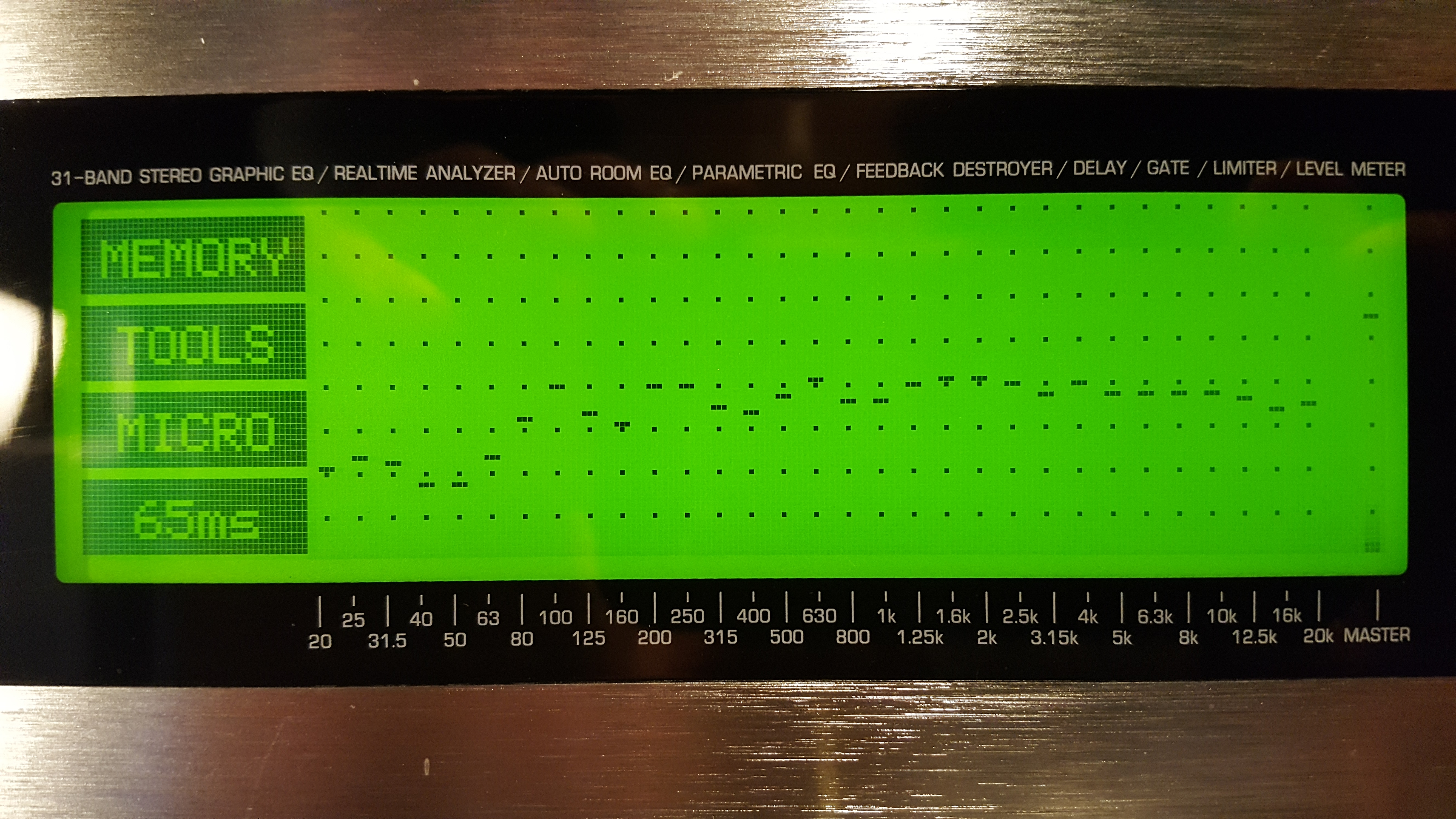
Whenever the placement is changed, that means it’s time to redo the room tuning for them. The way this is done is by using a piece of equipment called a real time analyzer. A real time analyzer sends pink noise through your speakers that will be picked up using a microphone and can be seen on a graph showing available frequencies and how much of that frequency is being broadcast through your speaker. You’ve probably heard of ‘white noise’. It’s sounds like static and is usually used to mask sounds in a room. Pink noise is similar except that it broadcasts all frequencies coming out of the speaker. Your goal is to make the pink noise have as flat an EQ as possible. You will accomplish this by running the sound from the mixing boards through a dedicated EQ before it reaches the monitors. You have to be sure that the mic for the analyzer is positioned in the spot where you’ll be sitting – near field monitors have a tight listening field and accuracy matters. The sound from pink noise will fluctuate, so you have to study the levels while it is running then review the peak capture when you turn it off. The picture below shows the running sound and peak capture for the NS10s before the EQ going in to the monitors is set up.

077
074

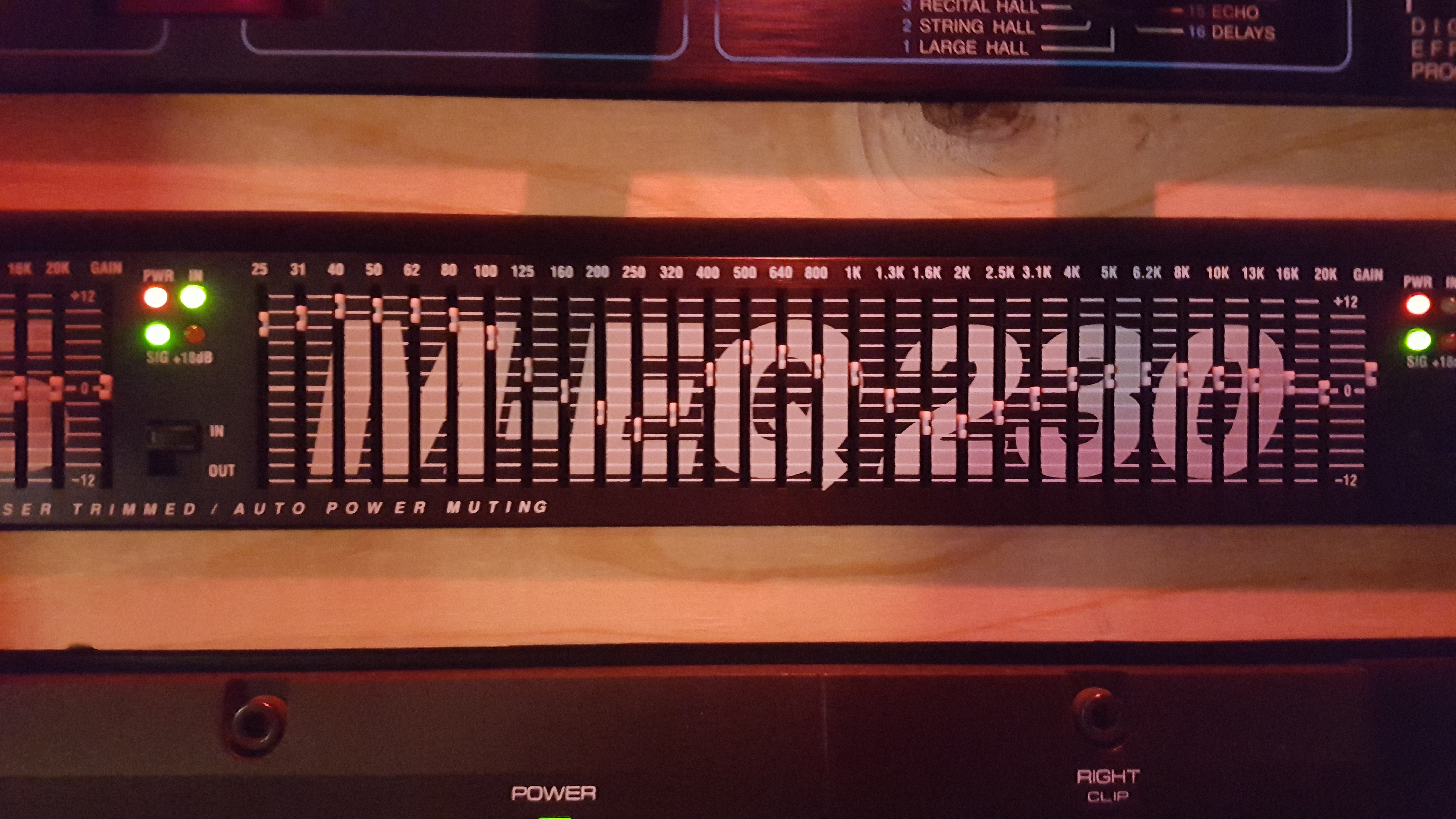
NS10Ms tend to be weak at the low end but depending on the monitor placement you may have peaks and valleys on frequencies throughout the spectrum. The next step is to raise or lower frequencies on the EQ going to the speakers to balance what you see on the graph. The more frequencies you have on your EQ the more accurate you can make the adjustments. The process takes a while since when you adjust one frequency it effects the frequencies around it. After the adjustments are made the final EQ setting looked like this:
078

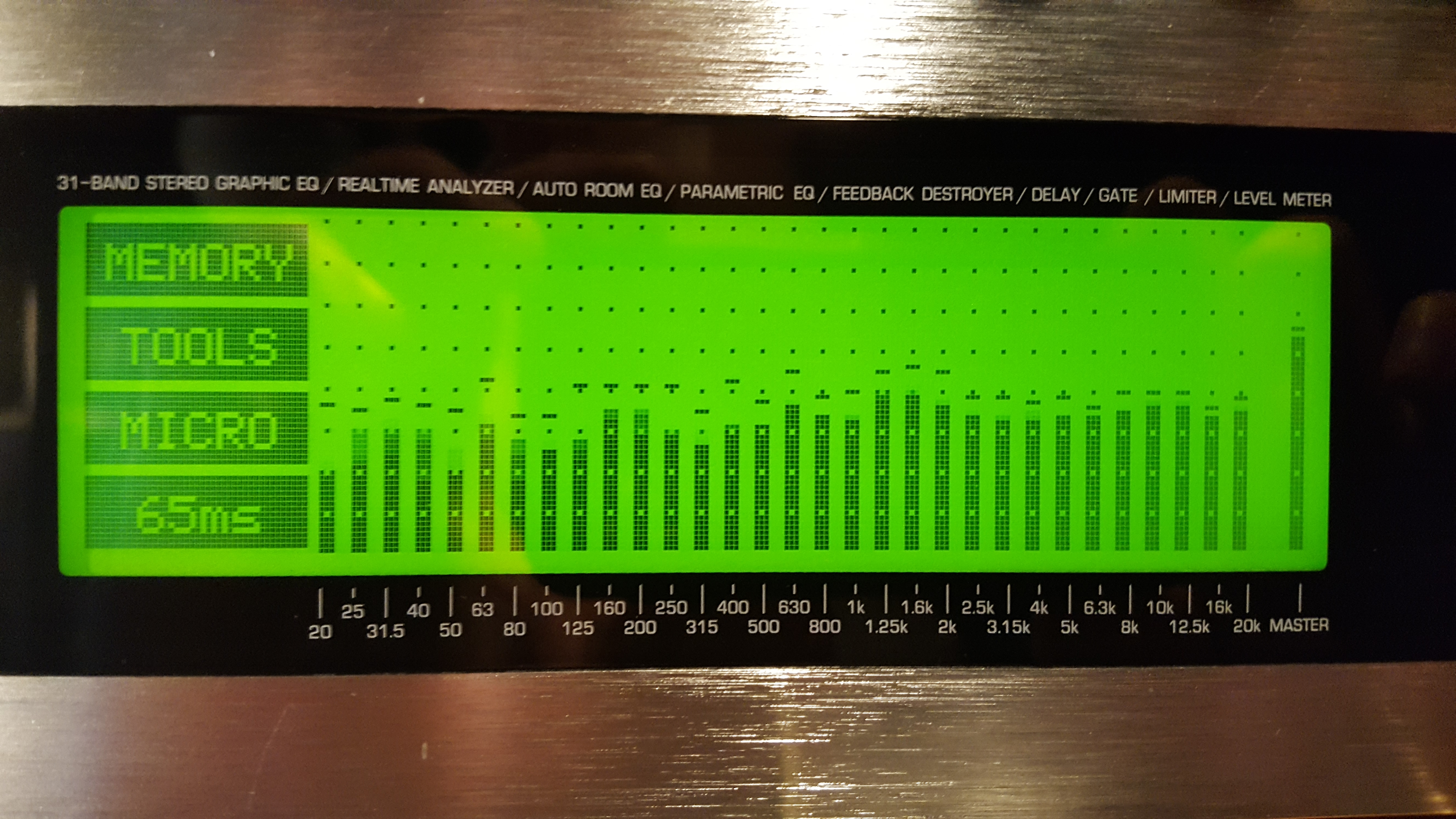
Here’s a snapshot of the running sound afterwards. The pink noise does fluctuate and will not look flat at any one particular second, so you want to let the sound run for a while and then look at the static capture lines (the horizontal lines at the top of the frequencies seen here) when the pink noise is turned off.
076

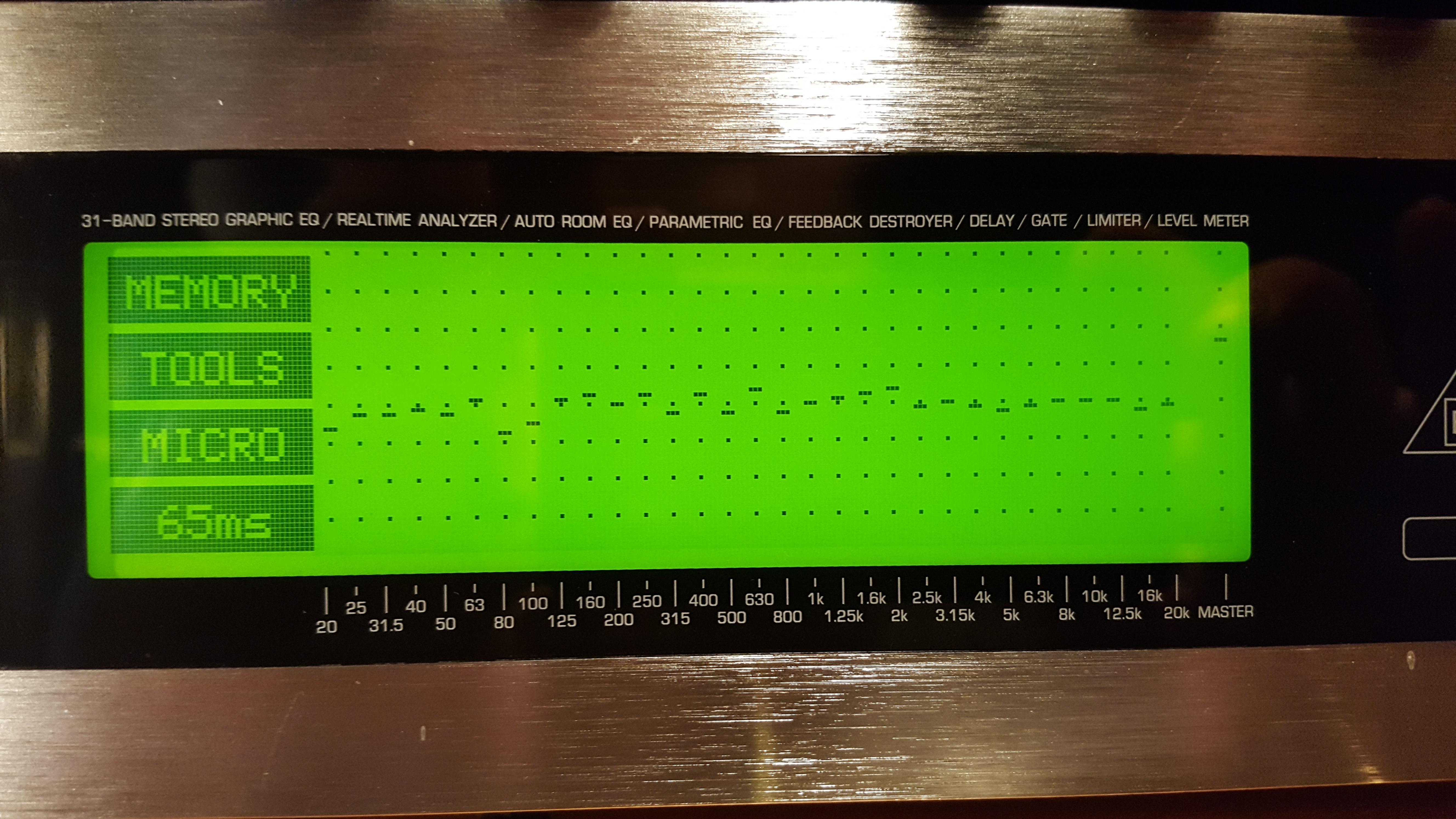
The final shot of the peak captures gives a good representation of where we ended up:
079

I’m pretty comfortable with the flatter EQ at the end of the process. One other tip is to make sure you are hearing equal levels from both speakers so you don’t overload one side when you’re mixing. The real time analyzer should let you get actual equal volumes for both sides. I have some volume hearing loss in one ear – the result of playing in bands for a lot of years (fortunately it is not frequency loss). To check on this take one channel of the song you’re mixing and run it straight down the center of your stereo field while sitting in your perfect center listening spot. If it sounds like it’s coming more from one channel or the other, make the adjustment on the volume of your reference amp. It’s at the end of the sound chain so it equalizes volume for your ears without effecting the balance in your actual mix. I also check the final mix of songs through the Real Time Analyzer so I’m using sight as well as sound to get the frequencies where I want them.

After the NS10 mixing is completed we’ll make any mix adjustments and also do the mastering through the higher end monitors set up in a different listening station. It’s always important to take your time, ‘put the mix down’ and come back to it later for review to get the best results possible. A great song will shine through no matter what, but a great mix will always improve your song.

From The Vault 10 – Conduit Plays ‘Follow Me’

As we continue to brush the dust from our song vault, we’re releasing another song from the live sessions recorded by Conduit. As with the song ‘Blinders’ released in a previous post, this song was on the album ‘Superior Olive’ (which, by the way, is still out there for purchase or your listening enjoyment). This was recorded a little different than our other live versions. That means we set up and play in a live format while using some studio tricks to gain separation in sound for a better recording with less bleed through. For this song we recorded live but heard the mix in headphones. Some of the songs we recorded had the amps in room but set up for separation. This time as we had no audience in, the amps were placed in separate rooms and the bass did not go in the PA system, only direct to the mixing board. The vocals were recorded in the same room but we used an old trick that I first heard about from The Grateful Dead’s shows with their ‘Wall Of Sound’ PA setup. The singer has two mics in front of them, stacked on top of each other. We used two identical mics. You reverse the phase on one of the mics going in to the mixing board. The vocalist only sings in to one of the microphones and the second mic is low enough that it doesn’t pick up the vocals. We’ve discussed phase cancellations in mics before (there is a video discussing this on our YouTube channel). Two mics out of phase will cancel each other out, in this case the drums are picked up by both mics so the in room drum sound is cancelled. Since the vocals only go in to one mic, they don’t experience the phase cancellation and will go cleanly in to the mixing board. I always wanted to try this and it’s a little tricky getting it right, but it worked out well in this case.

Variety Is The Spice Of Life

I’d like to share a recording technique that I read about when I started studio work and have used during many sessions over the years. We’ve talked about the overall concept of giving yourself a variety of choices for mixdown in several different posts. The idea is to track one guitar performance and end up with multiple tracks with different sound qualities. One way to do this with electric guitar is to have the guitar going to two separate amplifiers. The first step in this process is to use amps with different sound qualities. For the example in the photo we’re using a Peavey amp on one side and a Mesa on the other side. Both of these amps are tube amps. Another way to add variety would be to use a tube amp on one side and a solid state amp on the other side. You want to make sure the amps have some separation so there is not a lot of bleed through going to the microphones. Here we have the amps pointed in opposite directions with a sound deadening panel between them. For this recording the amps were not at high volume. If you needed to have one or both amps loud to get the overdrive effect you are looking for you could put the amps in separate rooms. Each amp’s sound will be captured by three microphones. In our example we are using two dynamic mics close to the amps and one condenser mic slightly farther away on each side. You could also apply different pedal effects to the amps or use the amps on board effects for variety.

Multi Amp Tech 011913 004

In our example we split the guitar signal going to the amps with a stereo chorus effect to allow for a greater stereo field when panning tracks left and right. You could also use an A/B box or another type of signal splitter. Each mic will go to a separate track in the recording software as seen in the photo below. You now have six unique guitar sounds you can use throughout the song. You could do as many tracks as your system input and mic collection allows. If you really want to enhance the stereo possibilities for the guitar track you could record the track twice and hard pan the different guitar parts to the left and right channels in mixdown which would give you twelve tracks to work with. We frequently use this double tracking technique in our Messin’ With The Music songs since we are using acoustic guitars and don’t have effects on them to create the variety we have with the two amp setup. If you’re trying to create a stereo sound without making it sound like a different guitar part you have to be fairly accurate when playing the individual tracks. Each track will naturally have a slight difference. The odds of you playing every note with exactly the same timing and volume are pretty slim. The idea is to try to do each track as similarly as possible – the differences will appear naturally.

Multi Amp Tech 011913 011

In the final photo below you can see how we used the diverse sounds throughout the song. We’ve edited the tracks, bringing in different mics during verses, choruses and breaks. You can now accent different parts of the song with unique sonic signatures while maintaining a consistent guitar performance.

Multi Amp Tech 011913 009

If you have enough tracks on your mixing console you can enhance these changes further by cloning a track, sending them to different channels on the mixing board and using different settings of EQ, dynamics and effects on each track. This simple set up will provide you with multiple guitar sounds to make your track sonically interesting.

September 2022 Grapevine

Fall is upon us. The temperatures are starting to cool down. Daylight is getting shorter. Fall is my favorite time of the year. Although I do enjoy the long days of sunlight in the summer, this time of year is special to me. We do our traveling in the fall to avoid the large crowds in the spring and summer. We’ll be spending most of October doing hiking and photography in the National Parks. We’re heading southwest this year to the land of desert, canyons and incredibly huge vistas. Away from crowds (hopefully), traffic and often cell service. It always feels like a time of renewal. A time to contemplate the beauty that still exists when you get out in nature. Hiking to the top of a mountain or mesa to see the sun rise or set. Away from lights where you can see all the stars and the Milky Way in the sky. Challenging yourself on hikes that skirt cliff edges and scramble over rocks. For me it doesn’t get better than this. We build memories that last a lifetime. Lots of pictures and videos that trigger those memories. When we’re out there we wish we didn’t have to come back to the daily grind and non-stop b.s. news cycles. You also tend to meet some like minded people if you hit the trails early. I think my pre-travel mindset had a hand in the songs that were picked for this month. Let’s take a listen.

First Up: Sharon Van Etten – ‘Come Back’

This song sounds like the musical equivalent of watching the sunrise coming over the horizon. Starting with just acoustic guitar and vocals, the beginning of the song sets the mood. The guitar is panned slightly to one side, which puts a greater highlight on the vocals. Van Etten has an incredible voice and it’s front and center in this song. Keyboards slowly rise in the right channel to match the guitar on the other side. After a while you’ll hear a bass in the background adding some depth and bottom end to the song. When the chorus comes in the second time at the 1:30 mark, the vocals are doubled with harmonies added, drums and more keyboard appear and the music swells louder. If you create a song that has an emotional core and can produce the same kind of emotion for your listeners, you’ve succeeded. This song brings the feeling of a beautiful melancholia. It shows the importance of a song’s arrangement in achieving this. The slow build of the instruments as the song progresses. The power that builds throughout in the vocal presentation. It ends with a drop down in the last thirty seconds to just vocals and keyboards. The song succeeds in taking the listener on a 4:30 trip. The trip ends lyrically too, with the line “Come back, moments of fire can turn the car on back home”.

Next Up: Rolling Blackouts Coastal Fever – ‘Saw You At The Eastern Beach’

Rolling Blackouts Coastal Fever have put their song together in a very different way than the previous track. There is almost a separation between the music and the vocals. Let’s start with the music. There’s a nice little intro in the very beginning of the song. A little synth riff starts us out with a strong bass line coming in. A very straight forward drum line anchors the song throughout. Two different guitar lines are panned in the left and right channels. They stay within the chord pattern of the song, but the riffs they play are sometimes loose so the parts do not sound too repetitive. They’ve kept the bass line relatively high in the mix so that rather than acting as sonic fill at the low end, it’s another riff added on with just as much prominence as the guitars. Every once in a while a guitar playing a lead riff is added down the center of the mix. With the effects on the guitars, the overall feel is a wall of sound grounded by the steady beat of the drums. At the 2:56 mark there’s a neat lead guitar part. It keeps the same feel as the rest of the music, rolling along with the huge wash of the rest of the instruments. While all this is going on instrumentally, the vocals seem to sit in almost another plane of the song. They’re somewhere between singing and spoken. They’ve added a lot of reverb to the vocals and they’re not way up front in the mix, which keeps them in line with the instruments and gives them the feel of separate but equal in the arrangement. It ends with another interesting synth blip, finishing the song the way it started as if you’ve finished a chapter in a book.

Finally: Cola – ‘Degree’

We’ll finish with a song that relies on the rhythmic interplay of the instruments and vocals to create the feeling and tone of the song. Each instrument follows it’s own line of rhythm throughout the song. To make this arrangement work you have to pay special attention to the EQ of each instrument. Since you don’t want the instruments to all blend together, the mix is very bright. They’ve pulled up the top end of each instrument so they stand out as separate pieces. There’s a great snap to the snare drum. If you listen carefully to pick out the kick drum, even that has a bit more snap than boom. You can get a good picture of how everything interplays if you listen closely at about 2:00. The guitar is playing arpeggiated chords, the bass is sliding between foundation notes, the vocals are working another rhythm and the snap of the snare and cymbals keeps the song driving forward. There’s a guitar part I really like at about 2:20. The guitar is slow strumming chords and besides hearing the chord itself you can hear the pick hitting each string, which adds another rhythmic element to the mix. One other little recording note – if you listen to the very end of the recording you can actually hear the amp buzz from the guitar during the short fade out. I think that’s a cool thing to leave in.

Retro: James Taylor – ‘Country Road’

Since I’m gearing up for hiking, I needed to include ‘Country Road’ in this month’s selections. This song and the album ‘Sweet Baby James’ is my go to listen when I’m thinking of being outdoors. I don’t listen to music when hiking – there’s more than enough just being on the trail to fill your senses. But if the right hike and mood presents itself…..Last year we listened to it on our hike on the Tall Trees Trail in Redwood National Park. We got there at 6:30 in the morning and were the only people on the trail. On a side note – if you’re going to listen to music on the trail, use earbuds. People are there for the peace and solitude.

Messin’ With The Music Part 21 – ‘Mama Told Me Not To Come’

We’re back with another cover tune for our ‘Messin With The Music’ series. This time we did our take on the Three Dog Night song ‘Mama Told Me Not To Come’. The song was originally released on their 1970 album ‘It Ain’t Easy’. The song was written by Randy Newman and was first recorded by Eric Burdon and The Animals in 1967. Newman also recorded his own version. Each version was a bit different with the Three Dog Night version hitting a funky, rock and roll style. The Three Dog Night version eventually hit number one on the pop charts. Our cover stuck with the usual Messin’ rules – acoustic instruments with each track played straight through. To fill out the basic sound, there are two acoustic guitars panned hard left and right as well as two tracks on six string banjo also panned to each side. There are bass and mandolin tracks as well as several different tracks with hand percussion. We have a single vocal track in the verses and multiple vocal tracks in the chorus. We tried to keep the same upbeat fun feel as the original track, with the amused observations of the party in the verses. It was a fun recording – there’s an interesting time signature difference between the verses and choruses. Hope you enjoy it.